You can start crocheting with one ball of yarn, one hook, and a few basic finishing tools. The essential crochet supplies for beginners should support clear stitch visibility, comfortable handling, and consistent practice.
A large tool collection won’t compensate for yarn that’s difficult to work with or a poorly matched hook. Start with compatible materials, then add equipment when a project requires it. These recommendations give you a practical foundation for your first stitches.
Key Takeaways
- Choose smooth, light-colored, medium-weight yarn so you can identify individual stitches.
- Pair your crochet hook with the yarn label’s recommendation; one size doesn’t suit every yarn.
- Keep sharp scissors and a blunt yarn needle available for cutting yarn and securing ends.
- Stitch markers help track edges and rounds, but contrasting scrap yarn can substitute.
- Begin with a small practice swatch before purchasing specialized accessories.
Essential Crochet Supplies: Choose Yarn and Hook
Yarn and hook selection determine how easily you can form, inspect, and adjust your stitches.
Smooth, Light-Colored Yarn
Choose medium-weight yarn with a smooth surface and clearly defined strands. The Craft Yarn Council’s yarn weight system classifies category 4 as Medium, commonly called worsted.
The category number describes yarn thickness, not the physical weight of the ball. That’s an important distinction when comparing materials.
Cream, pale gray, or light blue makes stitch placement easier to see. Dark colors and fuzzy surfaces obscure loops; decorative texture adds difficulty before you’ve developed consistent tension (how tightly you hold and work the yarn).
Acrylic is a practical option for practice. Cotton also works, although its limited stretch can feel less forgiving. Our guide to yarn for beginner crochet expands on these material choices.
A Compatible Crochet Hook
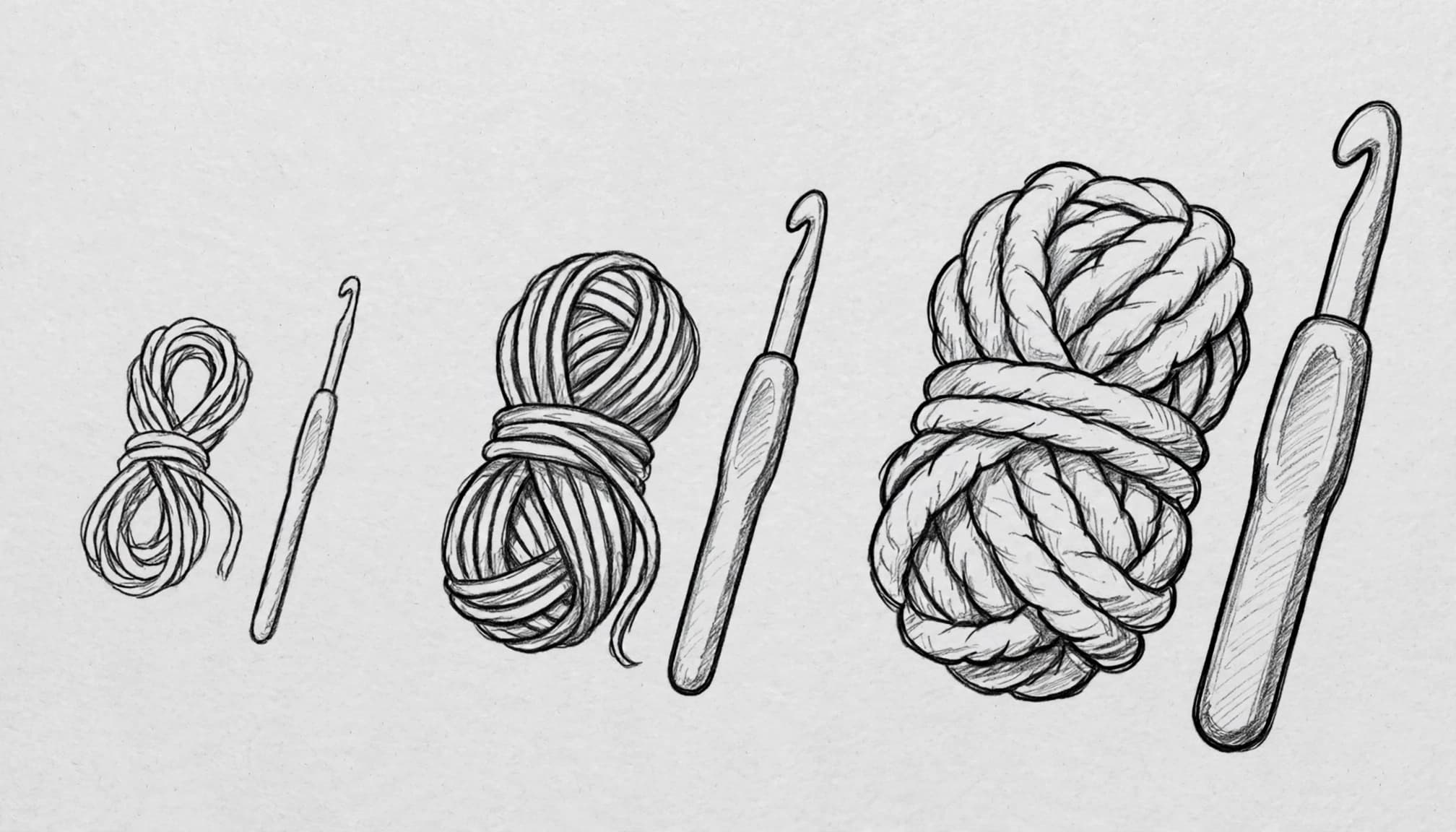
Start with the hook recommendation printed on your yarn label. A 5.0 mm hook (US H/8) is a common beginner option, and Lion Brand’s crochet hook guide identifies it as a starting point for several worsted yarns.
However, the Craft Yarn Council’s general category 4 guidance suggests 5.5 to 6.5 mm. These recommendations aren’t interchangeable rules; yarn construction and project requirements affect the appropriate size.
Choose an aluminum hook or an ergonomic model with a comfortable handle. A smooth shaft helps loops move without catching. Keep your grip relaxed rather than squeezing the handle. Comfort matters more than buying a complete set before you’ve established which shape you prefer.
Small Tools for Finishing and Tracking Stitches
These accessories handle tasks your hook can’t complete efficiently: cutting yarn, securing loose ends, and maintaining stitch counts.
Scissors and a Blunt Yarn Needle
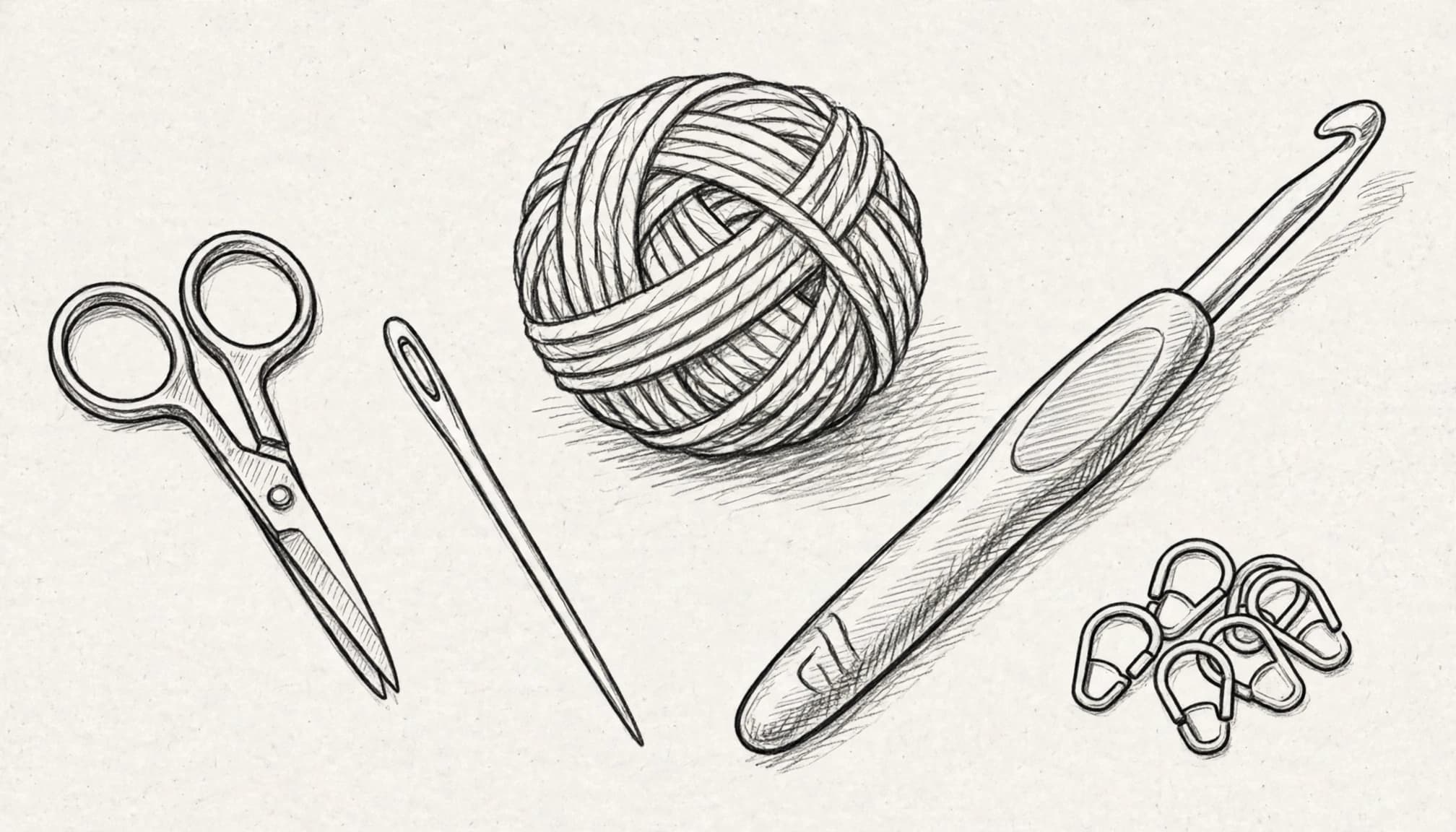
A small, sharp pair of scissors is sufficient. You need a clean cut through yarn, not specialized decorative blades. If you already own suitable scissors, use them rather than buying another pair.
Add a blunt yarn needle, also called a tapestry needle, with an eye large enough for your yarn. It’s used to weave loose tails through the finished fabric and to join pieces when a pattern requires seaming.
Choose the needle to suit the yarn thickness. An oversized needle can distort a small swatch, while a narrow eye makes threading unnecessarily difficult. Metal and plastic versions both work; prioritize a smooth surface and an appropriate eye.
Stitch Markers and a Measuring Tool
Removable stitch markers help identify the first or last stitch in a row and the beginning of a round. They reduce counting errors, particularly when edge stitches are difficult to recognize.
Use locking or split-ring markers that can be removed from completed crochet stitches. Closed rings intended for knitting needles aren’t suitable for that placement.
Contrasting scrap yarn is a workable substitute. Thread a short piece through the stitch you want to mark, then remove it when no longer needed.
Keep a ruler or flexible tape measure nearby. Measuring a swatch shows whether its dimensions match the pattern’s gauge (the stated number of stitches and rows within a measured area).
Build a Simple First-Project Setup
Select supplies for the work you’re about to do. Buying equipment for several possible projects adds expense without improving your initial practice.
Start With a Small Practice Swatch
One ball of yarn is sufficient for a small practice swatch. If you’re following a project pattern, select the specified yarn weight and enough total yardage for that project. Ball size alone doesn’t indicate whether you have enough material.
Begin with a slip knot, chain stitches, and basic rows. Count your stitches after each row so increases or missing stitches don’t accumulate unnoticed.
The Craft Yarn Council’s crochet standards provide references for abbreviations and chart symbols you’ll encounter in patterns. Pair those references with our step-by-step crochet tutorial to practice forming a neat first swatch.
Postpone Equipment Without an Immediate Purpose
A yarn bowl, ball winder, blocking board, and electronic row counter can be useful later. None is required to begin forming stitches.
Use an existing pouch or small container to keep your hook, needle, scissors, and markers together. Store the yarn where it can unwind freely without rolling across the floor.
Good lighting is also part of an effective setup. Position your work where you can distinguish individual loops without leaning forward or tightening your grip. If your hands become uncomfortable, pause and adjust your position. Additional equipment won’t resolve excessive tension or a cramped working posture.
Start With Supplies That Support Consistent Practice
A reliable beginner setup prioritizes visible stitches, a compatible hook, and simple finishing tools. Keep your purchases focused on those requirements.
Begin with a small swatch and develop consistent tension before adding specialized equipment. Your first supplies should make the work easier to control, with room to expand as your projects become more demanding.