How to Crochet for Absolute Beginners: Learn the Stitches and Make Your First Project
HOW TO CROCHET FOR ABSOLUTE BEGINNERS : A crochet hook, a strand of yarn, and a few repeated movements can become a warm scarf or a small decorative square. Your first stitches may look uneven. That’s normal, and your hands will get steadier with practice.
You’ll learn which supplies to choose, how to hold your hook and yarn, and how to make the basic stitches. Then you can use those skills to start a simple first project.
You don’t need to learn every stitch or read a complex pattern before you begin. Make a small swatch, count your stitches, and build your skills one row at a time.
Choose beginner-friendly supplies for crochet
You can begin crocheting with a short list of supplies. Pick tools that feel good in your hands and make your stitches easy to see.
Pick a smooth, light-colored yarn
A smooth, medium-weight yarn is a helpful choice for your first practice. Individual stitches are easier to spot than they are in fuzzy or very dark yarn. Lion Brand also recommends medium-weight yarn in a light color for beginners in its crochet basics guide.
Check the yarn label for its weight, suggested hook size, and care instructions. These details help you choose a hook and learn how to wash the finished fabric.
Match the hook to the yarn
The yarn label usually lists a suggested crochet hook size. Start there, then adjust if the hook feels awkward or your stitches are too tight. A larger hook can make bigger, looser stitches; a smaller hook can make denser fabric.
Hooks come in different shapes and materials, so comfort matters too. Try holding the hook before settling on one, if you can.
Keep your first tool kit simple
You need yarn, a compatible hook, small scissors, and a yarn needle for weaving in loose ends. Stitch markers are optional, but they can help you spot the first or last stitch in a row. There’s no need to buy a large set of tools before you know what you like.
How to crochet for absolute beginners: make a chain
A foundation chain gives you a base for your first row. Take your time with each movement and keep your hands relaxed.
Create a slip knot
Leave a short yarn tail, then form an adjustable loop with the working yarn. Slide your hook through the loop and pull the working yarn to snug it around the hook. Keep the loop loose enough for the hook to move easily.
The loop on your hook does not count as a chain stitch. You’ll make the first chain with the next yarn-over and pull-through.
Hold the hook and yarn comfortably
Some crocheters hold the hook like a pencil; others use a knife-style grip. Either way works. Choose the grip that lets you move the hook without straining your fingers.
Let the yarn pass over one or more fingers on your other hand to control its flow. The yarn should feed smoothly, not feel stretched tight. Change your finger position if the yarn keeps catching or slipping.
Practice the chain stitch
Bring the working yarn over the hook, then pull it through the loop already on the hook. That pull-through makes one chain stitch. Repeat the movement to create a short chain.
Count the small V-shaped links as you go. Don’t count the slip knot or the loop on your hook. If your chain feels tight, ease your grip and try again.
Learn basic crochet stitches for your first project
A few basic stitches can make a useful practice piece. Patterns may use US or UK terms, so check which system they follow before you start.
Use a slip stitch to join or move
Insert the hook into the stitch or space named in your pattern. Catch the yarn with the hook, then pull it through the stitch and the loop on your hook in one motion. This is a slip stitch.
Slip stitches can join the ends of a round or help you move along an edge. They create a low, compact stitch.
Work single crochet into a foundation chain
Follow your pattern to find where to insert your hook; many basic patterns begin in the second chain from the hook. Yarn over and pull up a loop through the chain, leaving two loops on the hook. Yarn over again, then pull through both loops to finish one single crochet.
Repeat this in each chain across the row. In UK terminology, the same stitch is called double crochet. The stitch name changes, so checking the pattern’s terms can prevent confusion.
Turn rows and count stitches
At the end of a row, follow the pattern’s instructions for a turning chain, then turn your work. A single crochet pattern may ask for one chain, but turning-chain rules can vary. Read the instructions before you begin the next row.
Count the stitches in each row to help keep the edges straight. If the count changes, you may have skipped a stitch or added one by mistake. Pay close attention to the first and last stitch, where it’s easy to lose track.
Turn a practice swatch into a first project
A small square or washcloth gives you room to practice without a long commitment. You can use the same basic stitch for every row.
Make a small swatch first
Chain a short foundation, then work several rows of single crochet. The exact size isn’t important; focus on placing each stitch and turning your work. A swatch also shows how your yarn, hook, and tension work together.
If you lose your place, pause and count the row before adding more stitches. It’s easier to find a missed stitch in a small piece than in a larger project.
Read a simple pattern one instruction at a time
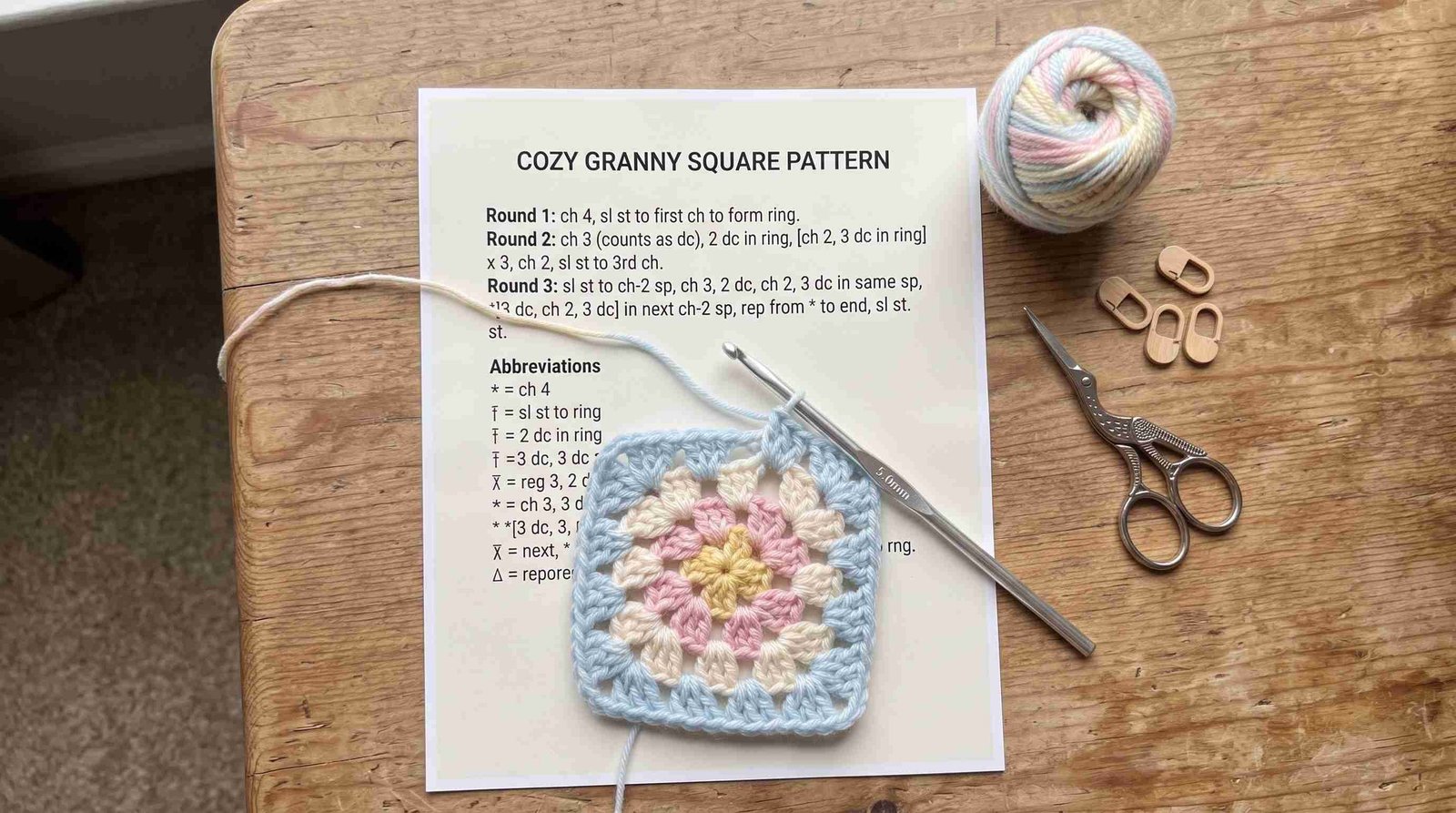
Look for the materials, abbreviations, stitch count, and row instructions. A pattern might say “sc in each st,” meaning to work one single crochet into every stitch. Check whether the pattern uses US or UK terms before following its stitch names.
The Craft Yarn Council’s beginner crochet block instructions show how a foundation chain and single crochet rows can form a practice block. For your first project, follow a pattern’s steps in order instead of trying to memorize them.
Finish the work neatly
When you’ve reached the desired length, cut the yarn and leave a tail. Pull the tail through the loop on your hook to fasten off. Thread it through a yarn needle, then weave it back and forth through the stitches to secure the end.
Take care not to pull the tail so tightly that the fabric puckers. A neatly woven end helps keep the work from coming undone.
HOW TO CROCHET FOR ABSOLUTE BEGINNERS : Fix common beginner crochet problems
Uneven stitches and small mistakes are part of learning. Check a few simple things before deciding you need to start over.
Keep the edges from getting wider or narrower
Count your stitches at the end of each row and compare the number with the pattern. Check that you worked into both the first and last stitches. Missing the last stitch can make the piece narrower; adding an extra stitch can make it wider.
A stitch marker can help you mark the row’s first or last stitch. Remove it as you reach that spot on the next row.
Loosen stitches that feel hard to work into
Keep the loop on your hook loose enough to slide along its shaft. If you grip the yarn or hook too tightly, the stitches may become difficult to enter. Relax your hand and let the yarn feed through your fingers.
If your stitches remain very tight, try a larger hook. Check how the fabric feels before making a larger piece, since hook size affects stitch size and fabric density.
Undo mistakes and keep practicing
If you spot an error, pull the working yarn gently to undo stitches until you reach it. Put the hook back through the loop and work the stitches again. This is a common way to fix a row, not a sign that you’ve failed.
Short practice sessions can make the motions feel more familiar. Try the same swatch again if you want another chance to work on even chains, clear stitch placement, or straight edges.
HOW TO CROCHET FOR ABSOLUTE BEGINNERS : Conclusion
For your first crochet project, choose smooth, light-colored yarn and a hook that feels comfortable. Practice the chain, learn single crochet, and count each row so your swatch stays even. A small, imperfect square is still a success: it gives you the skills to keep going.
Make one more row today, or use your new stitches to start a simple square.