Wondering “can I make money selling crochet items in the US?” Explore realistic income expectations, pricing tips, and the best platforms like Etsy and craft fairs.
The short answer is yes, but turning a relaxing fiber arts hobby into a profitable business requires more than just knowing how to stitch. If you find yourself asking, “can I make money selling crochet items in the US?”, the reality depends entirely on your product strategy, pricing model, and where you choose to list your inventory.
The handmade market in the United States is vast, but it is also competitive. To succeed, you must treat your crochet hook like a manufacturing tool and clearly understand the different retail avenues available to you.
The Best Platforms for Selling Crochet in the US
Choosing the right platform dictates your audience, your overhead costs, and how you handle shipping. Most successful crochet business owners diversify their sales across a mix of digital and physical spaces.
1. Etsy: The Global Digital Storefront
Etsy remains the largest marketplace for handmade goods in the US. The built-in audience is actively searching for unique, handmade items, making it an excellent launchpad.
- The Pros: You get instant access to millions of buyers without needing to build website traffic from scratch.
- The Cons: You are competing against thousands of other fiber artists. Success here requires excellent product photography and a strong understanding of search engine optimization (SEO) to make your listings visible. You also need to account for listing fees and transaction percentages in your pricing.
2. Local Craft Fairs and Artisan Markets
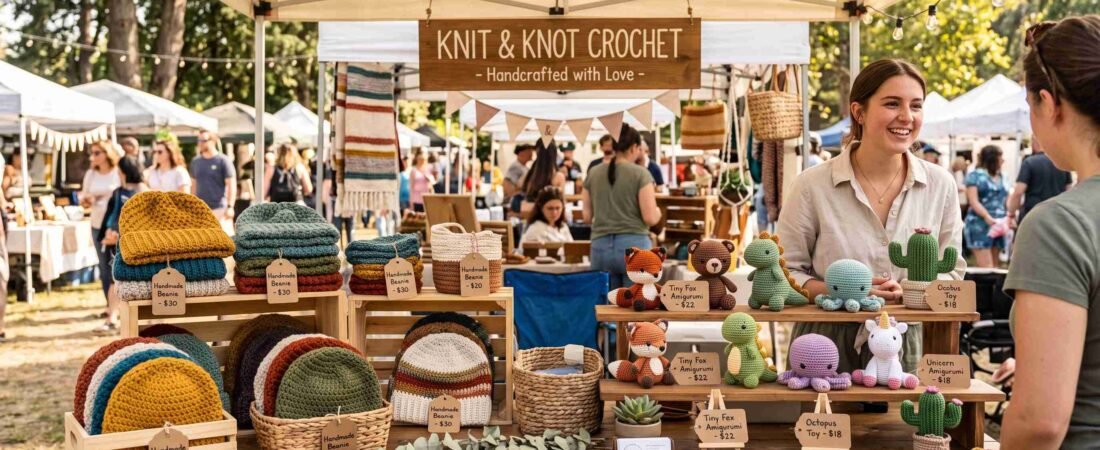
Selling in person is one of the most effective ways to move crochet inventory. Fiber arts are highly tactile; when a customer can physically feel the softness of a merino wool beanie or see the exact dimensions of an amigurumi toy, conversion rates skyrocket.
- The Pros: Zero shipping logistics, immediate payouts, and the ability to build a localized brand presence in your community.
- The Cons: You must pay upfront booth fees (which can range from $25 at a school bazaar to several hundred dollars for a juried artisan festival) and spend hours standing at your stall.
3. Facebook Marketplace
For larger, heavier items like chunky afghans or oversized plushies, shipping across the US can quickly kill your profit margins. Facebook Marketplace allows you to target local buyers.
- The Pros: There are no listing fees, and buyers handle the pickup. It is a highly effective way to sell high-ticket, bulky crochet items directly to your neighbors.
- The Cons: You have to manage direct messages, negotiate with lowball offers, and coordinate safe meetup locations.
Realistic Income Expectations (can i make money selling crochet items in the us)
When asking “can I make money selling crochet items in the US?”, it is vital to separate hobbyist income from a full-time living wage.
Very few makers replace a full-time corporate salary strictly by selling finished crochet objects. Hand-stitching is a time-intensive process that cannot be automated by machinery. If a complex blanket takes you 40 hours to make, pricing it to pay yourself a standard US hourly wage (plus material costs) pushes the retail price into the hundreds of dollars, which shrinks your buyer pool.
Most successful sellers operate their shops as a lucrative side hustle, generating anywhere from $200 to $2,000 a month. Those who scale to full-time incomes usually diversify by selling written PDF patterns, hosting ads on a crochet blog, or teaching workshops alongside selling their physical finished items.
Profit Tips for the Modern Maker
To maximize your handmade profit margins, you have to optimize your production process and price your work strictly by the numbers, not by what you “feel” it is worth.
- Implement a Strict Pricing Formula: Never guess your prices. A standard starting formula is: (Cost of Materials + Cost of Your Time) x Wholesale Multiplier (usually 1.5 to 2) = Retail Price.
- Focus on High-Margin, Quick Items: Instead of spending a month on a single king-sized blanket, focus your inventory on items that take under two hours to produce. Trendy beanies, reusable cotton market bags, and small amigurumi keychains offer a much higher return on your hourly time investment.
- Master the Fundamentals for Speed: Production speed is directly tied to profitability. Building strong beginner skills through resources like Lux Crochet’s pattern guides can help new sellers produce consistent, marketable items faster. When you no longer have to frog (unravel) your work due to curled edges or dropped stitches, your hourly output increases dramatically.
- Buy Yarn in Bulk: Once you establish your core product line, stop buying yarn at retail prices. Source your materials in bulk or apply for wholesale accounts with major US yarn distributors to cut your overhead costs in half.
By treating your time as a valuable business asset, targeting the right platforms, and optimizing your production speed, you can absolutely carve out a profitable slice of the handmade market.