
Why Is My Crochet Curling? Causes, Fixes, and Ways to Keep It Flat
Wondering why your crochet is curling? Learn how to identify the cause—from a tight foundation chain to tension issues and discover the exact fix to keep your work flat.
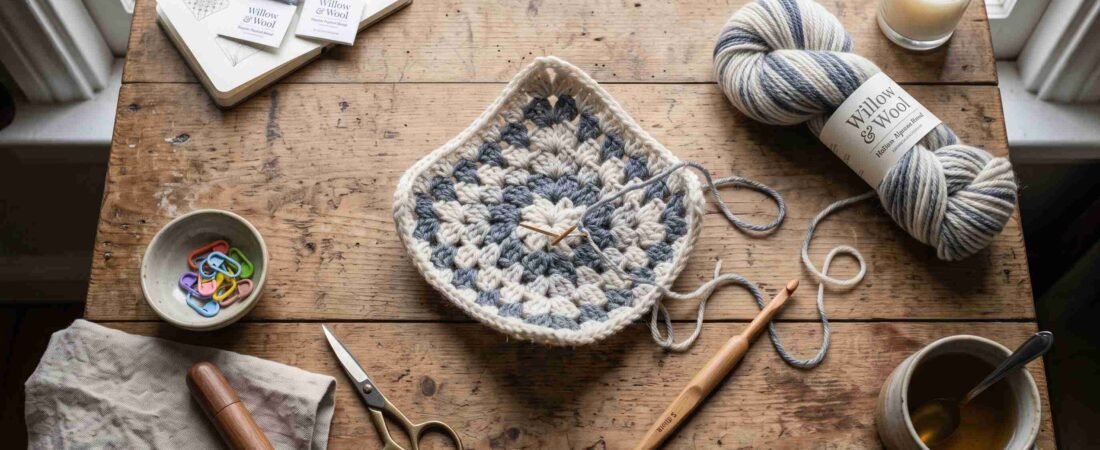
You set your crochet blanket down, and the corners spring up. A scarf rolls at the edges, a coaster forms a shallow bowl, or a circle ripples instead of lying flat. It’s frustrating, but curling is often a clue about how the piece is made, not a sign that you need to start over.
The cause may be a tight foundation chain, firm tension, dense stitches, or a stitch-count error. Look at where the curl starts before changing your hook or altering the pattern. Once you spot the likely cause, you can choose a fix that suits the project and avoid the same problem next time.
Why Is My Crochet Curling? Find the Cause by Its Shape
The location of the curl can narrow down the problem. Check whether it starts at one edge, pulls across the whole piece, or appears as you work in the round. That clue can save you from making a change that fixes one area but throws off the rest.
Curling along the foundation edge points to a tight chain
If the bottom edge curls while the rows above it lie flat, your starting chain may be too tight. A firm chain can pull inward because it has less give than the fabric you crochet into it. Check whether the curl begins right at the first row, and compare the chain’s stretch with the rows above.
Curling across the fabric can signal tight tension
When the whole piece curls or feels stiff, your tension or stitch pattern may be the cause. Dense stitches can draw fabric inward, especially if you crochet firmly. Feel the fabric and check how it drapes; a tight foundation edge is less likely to explain curling across the full piece.
Curling in a circle often points to shaping
A flat circle needs the right number and placement of increases. Too few can make the work cup into a bowl, while too many can create waves or ruffles. Count each round and compare the increase locations with the pattern before changing the stitch count.
Why Is My Crochet Curling? Match the Fix to the Cause
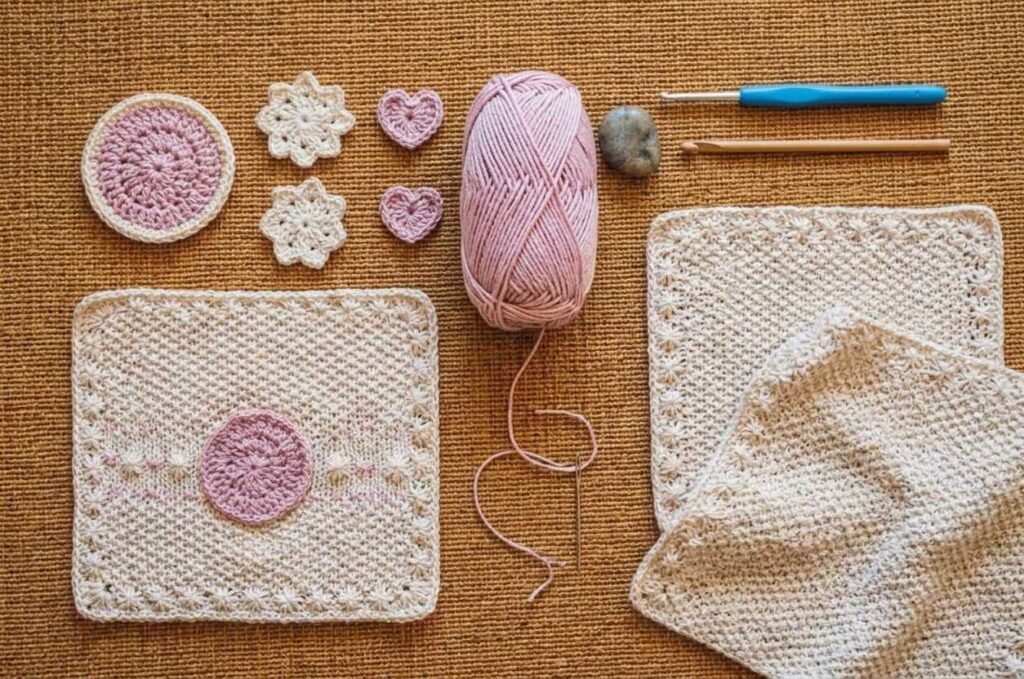
A fix that helps one project may not suit another. Before changing hooks or stitch counts, check the pattern and consider making a small test piece. Try one change at a time so you can see what improves the fabric.
Loosen a tight foundation without guessing
For your next row or project, try making the starting chain with a hook one size larger, then switch to the pattern hook. A foundation single crochet or foundation double crochet can also give the edge more stretch, if the pattern allows that method. If the current chain is severely constricted, restarting may give a better result than pulling at it or forcing it flat.
Adjust hook size when the fabric feels too dense
Make a swatch with a slightly larger hook and compare its feel and measurements with the original. A looser fabric may drape better, but changing hook size can also change the finished dimensions. If size matters, check your gauge against the pattern before continuing.
Correct circle shaping with stitch counts
Count the stitches in each round, including any turning or starting chain the pattern says to count. Then check that the increases fall where the instructions place them. Add or remove increases only when the pattern or the shape supports that change; random adjustments can make the circle uneven.
Use blocking to relax mild curling
Blocking can help a crochet piece lie flatter, but it won’t correct every cause. It works best for mild curling when the stitch count and construction are sound. Check the yarn label and pattern first, since fibers respond differently to water and heat.
Wet blocking can help washable natural fibers
If the yarn’s care instructions allow it, wet the piece gently and press out extra water without wringing. Lay it flat, shape it to the right size, and let it dry fully. This can relax many washable natural-fiber projects, but follow the pattern’s care guidance if it differs.
Steam blocking needs care with synthetic yarn
Steam may help shape some yarns, but heat can damage or melt synthetic fibers. Check the yarn label before using a steamer or iron, and test a small area if the care guidance permits steam. Keep the hot tool away from the yarn unless the instructions say that method is safe.
Reshape gently instead of stretching the stitches
Pin the piece only as much as needed to encourage it to lie flat. Pulling hard can stretch stitches out of shape or make the edge too wide. Blocking may ease mild curling, but it won’t reliably fix incorrect stitch counts or severe tension problems.
Prevent crochet curling in your next project
A few checks during a project can catch curling before you’ve made many rows. Start with the pattern’s hook and gauge guidance, then pay attention to how the fabric feels and behaves. Small adjustments are easier to assess early.
Swatch when fit or size matters
Make your swatch in the pattern’s stitch, not just in basic single crochet. Measure it after blocking if the pattern calls for a blocked gauge. If the swatch feels stiff or measures differently from the pattern, adjust your hook before making the full piece.
Check the edges and stitch counts as you work
Lay the project flat every few rows or rounds and look for early signs of curling. Count stitches at row ends, where missed or added stitches can change the shape. For circles, use stitch markers to track increase points and make counting easier.
Choose a flexible start and suitable hook
A foundation stitch can help when a tight first edge is likely to cause trouble and the pattern permits it. Otherwise, use a relaxed hand with the starting chain, or try a larger hook for that chain alone. Treat the pattern’s hook size as a starting point, then check gauge and fabric feel.
Keep your crochet flat with a cause-first fix
Match the curl to its likely source: a tight foundation edge, dense fabric, or circle-shaping issue. Adjust tension, hook size, or stitch counts based on what you see, and use blocking to shape sound fabric rather than hide a construction problem. Always check the yarn’s care instructions before wet or steam blocking.
Change one thing, lay the work flat, and reassess before trying another fix. Many crochet curling problems improve without abandoning the project. Find where the curl begins, then make the smallest useful adjustment.